
How the Right Light Changes a Space Lighting is one of those design details you may not notice right away […]
Lighting is one of those design details you may not notice right away when it is done well. You simply walk into a room and it feels comfortable, inviting, or easy to use.
Get it wrong, though, and you notice.
A room can have beautiful finishes, thoughtful storage, and great furniture, but harsh lighting can make the whole space feel cold. Dim lighting can make an otherwise functional area frustrating to use. Even the colors you carefully chose can look different depending on the light around them.
One of the easiest places to start is with color temperature.


Light bulbs are measured in Kelvin (K), which describes the color of the light.
Lower Kelvin temperatures, usually around 2700K–3000K, give off a warmer, more golden light. This tends to feel softer and more comfortable, which is why it is common in bedrooms, living rooms, and other spaces where you want to relax.
Higher temperatures, around 3500K–5000K, produce a whiter or cooler light. These can feel brighter and more energizing and are often useful in kitchens, workspaces, bathrooms, and other areas where visibility matters.
Neither is automatically better.
Think about how you use the room. A warm light might feel great in a bedroom at night, while the same warmth could make it harder to distinguish between navy and black clothing in a closet.
Which is why:
 Your Closet Needs Good Lighting, Too
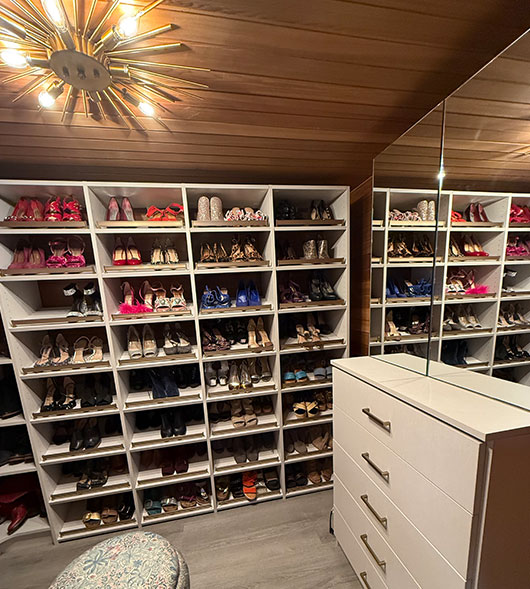
Closets are a great example of how lighting can affect both design and everyday function.
If you have ever stood in front of a closet trying to find something in a dark corner, you already know the problem. Overhead lighting often leaves shelves, corners, and hanging clothes in shadow.
Adding lighting directly into the storage system can change that.
Under-shelf lighting can illuminate the space below it. Vertical lighting can brighten the sides of a closet. Illuminated glass shelving can turn accessories into part of the design by beautifully showcasing jewelry or watches. Even a well-placed lighted hanging rod can make it easier to see what you actually have.
This is especially helpful when you are choosing an outfit. Being able to see the difference between similar colors, find a particular accessory, or spot something tucked toward the back of a shelf saves time during an otherwise rushed part of the day.
 Think About the Color of Your Finishes
Lighting also interacts with the materials and colors already in your home.
A warm bulb can bring out the warmer tones in wood finishes and create a cozy feeling. Cooler light can make whites and grays appear crisper.
This is one reason a paint color or cabinet finish can look completely different in a showroom than it does at home. Natural daylight, overhead fixtures, lamps, and even the direction a window faces all affect how we see color.
Tip: When selecting finishes, it can be helpful to look at samples under the lighting that will actually be used in the space.
 Layering Makes a Difference
A room does not have to rely on one bright overhead light.
In fact, multiple sources of light often make a space feel more comfortable and functional. Think of overhead lighting as general illumination, then add task or accent lighting where it is needed.
In a kitchen, that could mean ceiling lights combined with under-cabinet lighting. In a bedroom, you might have an overhead fixture paired with bedside lamps. In a closet, integrated lighting can provide illumination exactly where the storage is being used.
This approach also gives you more control. You can have brighter light when you need to find something or get ready in the morning, then turn on softer lighting when the room is being used in the evening.
 Good Lighting Should Work With the Room
The best lighting choices depend on the space, the finishes, and the way you live in it.
A closet needs enough light to see clothing and accessories clearly. A reading area needs focused light. A dining room may benefit from something softer and warmer. A pantry needs good visibility so items do not disappear into the back corners.
These decisions may seem like small details, but they add up.
When you are planning a room, think about where you will stand, what you will reach for, and what you will need to see. Consider where shadows might fall and how the space will be used at different times of day.
Lighting is part of the design from the beginning—not something that has to be figured out after everything else is finished.
And when the lighting is right, the whole room tends to work a little better.
Looking for a Custom Storage Solution designed with Lighting in mind? Click here to book a Free Consultation and see how we can help brighten your space.
Click Here to Book a Free Consultation Today
Up Closets of MetroWest & Greater Boston