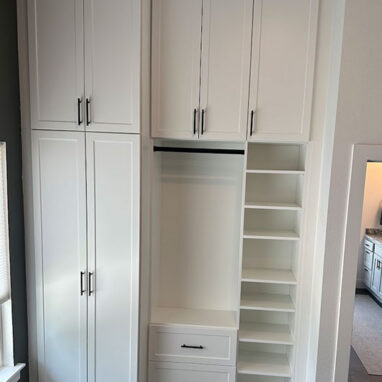
Clear the Floor: Your Entryway isn’t a Locker Insights & Organization Ideas for Kids at Every Age (from a Mom […]


Insights & Organization Ideas for Kids at Every Age (from a Mom & Designer)
The end of summer brings a familiar shift in energy. Families trade long, lazy pool days for the fast-paced rhythm of early mornings, school drop-offs, sports practices, homework deadlines, and everything in between.
Getting back into a school routine is a major adjustment for everyone. While color-coded folders and new planners certainly have their place, the real secret to a seamless morning routine isn’t something you’ll find in the school supply aisle.
It’s how your home is intentionally organized. Let’s call it the scaffolding.
When the physical environment is designed around a family’s actual routines, organization can become much more intuitive. Instead of constantly reminding kids where things go or scrambling to find what they need, the space itself helps guide the routine.
And those needs change as children grow.

Younger children thrive on predictability, but they’re still developing their organizational and time-management skills. The goal isn’t to expect them to manage everything independently overnight. It’s to give them simple, visible systems that help them understand what comes next.
Setting aside small chunks of time (10-20 minutes) to plan ahead with them can help build skills in self-management and social awareness in a group dynamic. They are a part of a family system. Including kids with activities like making their lunches and snacks, preparing outfits ahead of time, and letting them write their own important dates on the calendar builds a foundation for independence over time
Another way to build up independence for school-aged children is by giving them storage options that grow with them. Custom kids’ closets with adjustable lower hanging rods, accessible shelving, and easy-to-use baskets put clothing within reach. As children grow, shelving and rods can be heightened and baskets can be exchanged for growing tastes and styles.

Idea 💡Create a Tomorrow Station
Instead of only giving backpacks a place to land, create a spot where tomorrow’s essentials get staged: backpacks, shoes, jackets, library books, sports gear, etc. This turns the entryway into a landing station & launch point, not just a storage area.
A custom mudroom or entryway might incorporate kid-height hooks, lockers, cubbies, shelving, labels, and bench seating. Custom cabinetry can hide clutter and support visual calm.
Tips on Labels
Names or item types can be added easily with plaques or labels. They’re generally inexpensive and come in a variety of types (chalkboard, wooden, etc.). DIY hacks: use any kind of paper and a laminator. Don’t have a laminator? Use two layers of packing tape and trim the edges. No one will know.
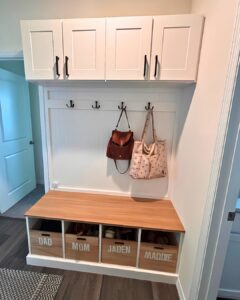

Middle school brings more teachers, more activities, and a much bigger jump in personal responsibility. This is where organization can begin shifting from “I’ll do it for you” to “I’ve given you a system you can manage.”
Idea 💡Integrating Routines
Setting up a family calendar in a clearly visible, eye level space that includes fun activities in addition to responsibilities can help integrate independent schedule monitoring. When kids have something exciting they are looking forward to, they are much more likely to be interested in keeping up with the calendar.
Add a reminder for a weekly backpack cleanout and make it a short ritual that everyone participates in, pivoting from “chore” to an easy habit built over time.This simple weekly routine keeps permission slips, old papers, and forgotten snacks from accumulating.
Idea 💡Create a “between activities” zone
For students juggling school work and extracurriculars, a designated place for things that will be needed again soon can be immensely useful and time saving.
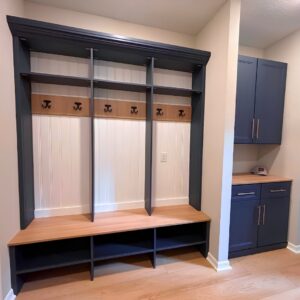
Locker-style mudroom systems are incredibly helpful with keeping important items organized.Think: sports bags, instruments, binders, gym shoes, project materials, and tomorrow’s backpack staged in one predictable location.
An entryway locker setup with a bench can be a designated drop-zone that gives students a surface to sort their things without turning spots like the kitchen counter into chaos. Then, rather than having every school paper pile on, create a simple system nearby for signing, returning, filing, recycling. This could be a small custom counter-top addition with a mail organizer that smartly matches your decor.
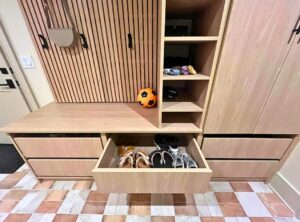
When everything has a structural home, the goal isn’t just a tidier house, it’s giving kids the opportunity to take more ownership of their own routines in a simple easy-to-repeat manner.
It doesn’t need to be complicated.
The important thing is creating a destination before the item becomes clutter.

By high school, students are balancing increasingly independent schedules. Their social lives matter more, extracurriculars may be more involved, and suddenly you’re realizing how (almost) grown up they are.
Teenagers aren’t necessarily going to meticulously stay on top of all their personal items and obligations, but they’re nearly there. Here’s where we can support them with strategically placed systems, that hopefully they’ll subconsciously pick up on and carry forward.
For example, design around where things naturally end up. If clothes land on a chair, add a hook or basket nearby. If bags end up on the floor, create a designated drop zone that flows with where they come and go from. If electronics migrate to the kitchen, incorporate an organized charging station where things are expected to go to recharge.
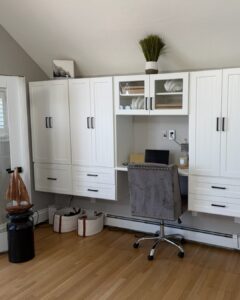
Idea 💡Design storage around friction points
As kids get older, organization becomes less about simply knowing where things go and more about managing competing responsibilities. A dedicated homework space, planning area, or built-in workspace can provide a clear place for schoolwork, schedules, and supplies while reducing visual distractions.
The best organization system doesn’t fight natural behavior. It works with it.
At this stage, good design isn’t about managing the routine for them. It’s about creating an environment that makes independence easier.
Back-to-school organization isn’t just about the kids.
Permission slips, sports schedules, school calendars, snacks, devices, and a dozen other little details can quickly spread throughout the house.
 Idea 💡Create a Visually Calm Family Command Center
A family command center can give paperwork and schedules a designated home, and paired with a thoughtfully designed pantry, it can make coming and going easy for kids and adults to accomplish in one place.
The center shouldn’t become another wall covered in papers. Visible information should be intentional. Everything else can have a place behind closed doors.
Consider concealed cabinetry for paperwork, a whiteboard, blackboard, or calendar for the information everyone needs to see, and charging storage for devices. Storage with doors helps with keeping the area looking clean and clutter free.
The best family organization system isn’t necessarily the one that looks the most impressive. It’s the one everyone can realistically maintain.
That’s why the right questions aren’t simply, “Where can we put all this stuff?”
They’re: Where does this happen? Who uses it? What do they need to reach? What tends to get left behind? And what would make this routine easier?
Get specific:
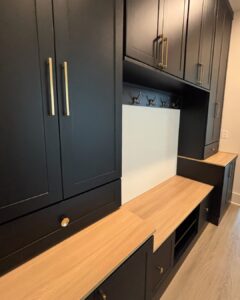 Because good organization isn’t about creating a picture-perfect home where nobody ever leaves a backpack on the floor. It’s about reducing friction, creating independence, and designing spaces that support the way a family actually lives.
And when a home is intentionally designed around those routines, that spot by the front door doesn’t have to become the designated school-stuff pile. It can become part of a system that actually works for kids at any age.
That’s intentional design for real life.
Click Here to Book a Free Consultation Today
Up Closets of MetroWest & Greater Boston